Look under the rocks of the sub-Antarctic islands, and you’ll likely spot a spider scurrying out. A recent study reveals these spiders were not brought by explorers.
Yves-Joseph de Kerguelen de Trémarec wrote, ten years after discovering the islands named after him, about his ambition to explore southern lands. He sought to find new territories in the vast seas surrounding the South Pole between Cape Horn, New Holland (Australia), and the Cape of Good Hope.
In 1772, he claimed land for the King of France and returned two years later, before James Cook’s arrival. His return was facilitated by Monsieur de Rosnevet, commander of L’Oiseau, who led the way ahead of Le Roland, the ship Kerguelen was on due to damage and bad weather.
The explorers faced harsh, rocky landscapes, returning to Mauritius exhausted. However, the small spiders that settled there did so some 5 million years ago.
According to a study in The American Naturalist, spider colonization of Antarctica began 9 million years ago. Jonas Wolff from the Greifswald Zoological Institute in Germany and David Renault from the Laboratoire Écosystèmes, biodiversité, évolution in Rennes, France, found that these spiders originated in Tasmania and southern New Zealand. Today, nine species inhabit the various sub-Antarctic islands.
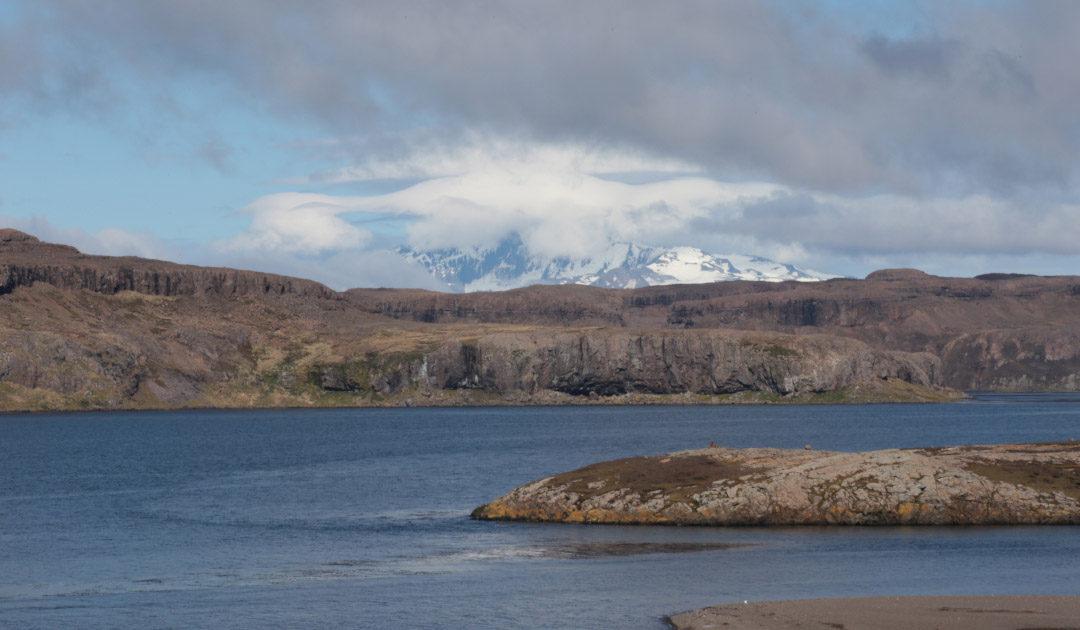
“To our surprise, we found clear genetic partitioning of the specimens of Myro kerguelensis from the islands of Crozet, the Kerguelen, and Macquarie Island, showing that their distribution of more than 9,000 km is not due to human-mediated translocation but to repeated natural long-distance dispersal followed by long-term isolation,” the authors explain.
Despite some evidence of spiders clinging to floating objects, genetic history indicates they colonized these islands by following circumpolar currents. Although spiders have been observed on bird feathers, Renault believes ballooning—a method where spiders let themselves be carried by air vortices—played a significant role in their dispersal. This method allows hundreds of spiders to travel long distances simultaneously.
The Crozet archipelago served as a refuge during glaciation periods, with other populations forming in Marion to the west, and Kerguelen, Heard, and Macquarie to the east. The genome of Kerguelen spiders shows signs of long isolation.
Since their arrival, these spiders have lived in the scree slopes of the Southern hemisphere, feeding on springtails and soil mites. On these isolated lands, wingless flies and their larvae provide prey. Naturalist Jean-Henri Fabre described their hunting as swift and lethal.
Renault notes that these spiders allocate silk threads to reproduction rather than foraging, creating compact cocoons to protect eggs and maintain moisture. The spiders leave these “germ boxes” under stones, serving as their shelter.
As explorers encountered these spiders, their diet likely expanded. Whalers, scientists, and visitors introduced new prey, providing access to the Antarctic Peninsula. Since then, efforts have been made to prevent the accidental introduction of new species.